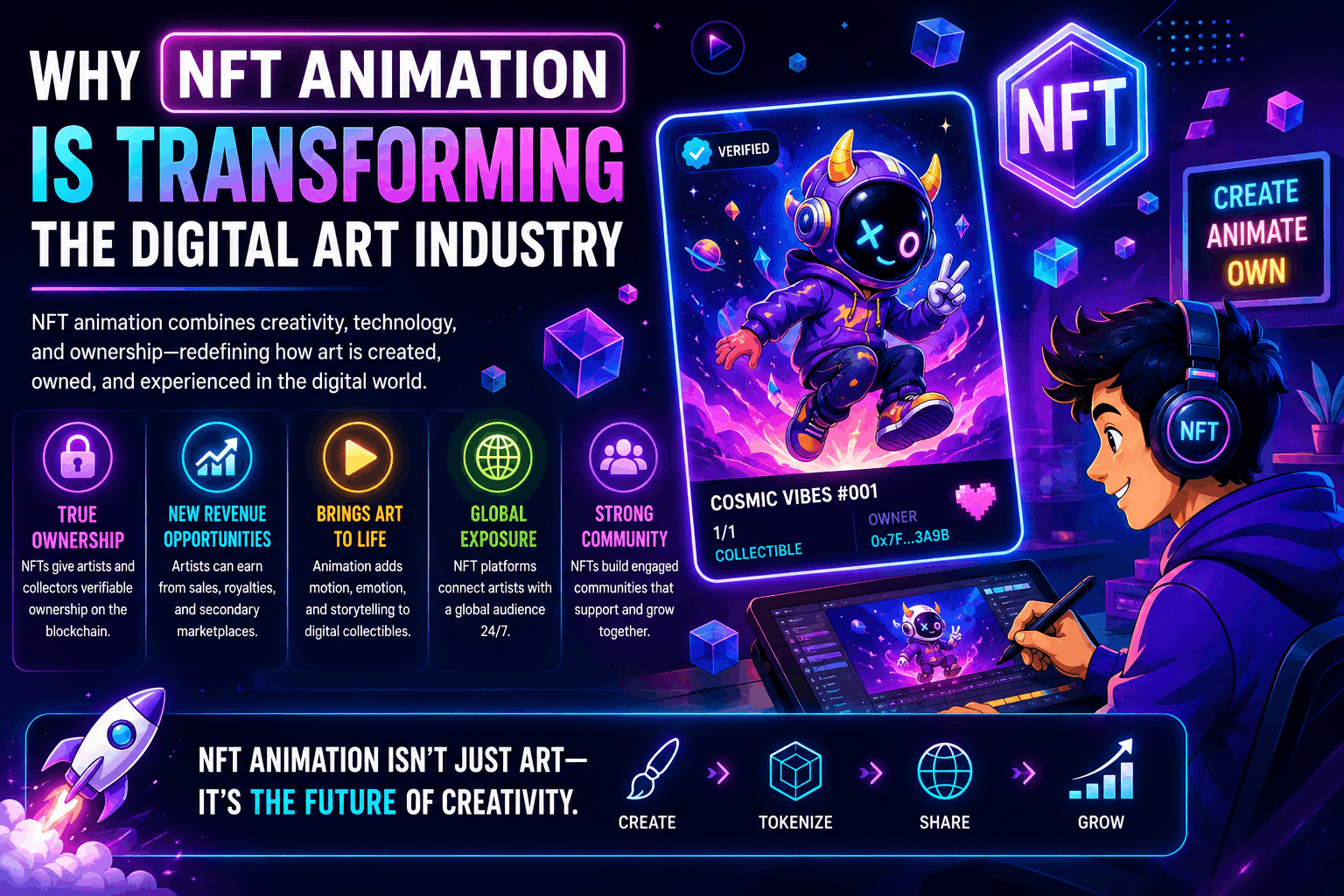
Why NFT Animation Is Transforming the Digital Art Industry
The digital art world has undergone a massive transformation over the past decade, but few innovations have been as disruptive as NFTs (Non-Fungible Tokens). Among the many creative forms emerging in this space, animation has taken a leading role. Today, NFT animation is reshaping how artists create, sell, and monetize digital artwork, while also changing how collectors perceive value in the online art ecosystem.
What was once a static, file-based form of digital ownership has now evolved into dynamic, interactive, and visually engaging animated assets. This shift is not just technological—it is cultural, financial, and creative. In this article, we will explore how NFT animation is transforming the digital art industry, why it matters, and what the future holds for creators and collectors.
Understanding NFT Animation
At its core, NFT animation refers to animated digital artwork that is minted as a non-fungible token on a blockchain. Unlike traditional digital art, which can be copied endlessly, NFTs are unique, verifiable assets stored on decentralized networks.
When animation is added to NFTs, it introduces movement, storytelling, and emotional depth. Instead of a static image, collectors receive evolving visuals—ranging from looping motion graphics to complex character-driven scenes.
This is where NFT animation services come into play. These services help artists, brands, and creators design, animate, and prepare digital assets for blockchain minting. They combine creative storytelling with technical execution, ensuring the final artwork is both visually compelling and blockchain-ready.
Why NFT Animation Is Gaining Popularity
The rise of NFT animation is not accidental. It is driven by a combination of technological advancement, artistic innovation, and changing consumer behavior.
1. Enhanced Visual Storytelling
Traditional NFTs are often static images, but animation allows creators to tell deeper stories. Movement adds emotion, rhythm, and personality to digital art. A simple character can express joy, transformation, or mystery through motion alone.
This storytelling advantage is one of the key reasons why collectors are increasingly drawn to animated NFTs.
2. Higher Perceived Value
Animated NFTs often feel more premium compared to static ones. The effort, skill, and time required to create animation significantly increase perceived artistic value. This allows artists to price their work higher and attract serious collectors.
3. Stronger Engagement
Animated visuals naturally capture attention better than static images. In a crowded NFT marketplace, movement helps artwork stand out, increasing visibility and demand.
4. Technological Accessibility
With modern tools and software, creating animations has become more accessible than ever. Artists no longer need large studios to produce high-quality digital motion art.
The Role of Digital Art Animation in NFTs
digital art animation is the backbone of the NFT animation industry. It refers to the process of creating motion-based artwork using digital tools such as Adobe After Effects, Blender, and various generative animation platforms.
In the NFT space, digital animation is used to create:
- Looping motion artworks
- 3D animated collectibles
- Interactive NFT experiences
- Character-based animated stories
- Generative art pieces
These animations are then minted as NFTs and sold on blockchain marketplaces, where ownership is verified and transferable.
What makes digital art animation particularly powerful in the NFT ecosystem is its flexibility. Artists can experiment with surreal environments, abstract motion, or hyper-realistic characters without the limitations of physical media.
Animated NFT Art: A New Creative Economy
The emergence of animated NFT art has created an entirely new creative economy where artists are no longer limited by galleries, agents, or traditional publishing systems.
Breaking Traditional Barriers
In the past, artists relied heavily on galleries and exhibitions to gain exposure. NFT platforms have removed these barriers, allowing creators to directly connect with global audiences.
Direct Monetization
Artists can now sell their animated works directly to collectors without intermediaries. Smart contracts also allow creators to earn royalties every time their NFT is resold, creating long-term income opportunities.
Global Market Reach
NFT marketplaces operate globally, enabling artists from any region to reach international collectors instantly. This democratization has significantly expanded opportunities for emerging creators.
Community-Driven Value
Unlike traditional art markets, NFT value is often influenced by community engagement. Animated works that go viral or build strong communities tend to appreciate in value rapidly.
How NFT Animation Is Changing the Role of Artists
NFT animation has redefined what it means to be a digital artist. Instead of simply creating visuals, artists now act as storytellers, technologists, and entrepreneurs.
From Static to Dynamic Creation
Artists are no longer confined to still images. They now design motion, time-based experiences, and interactive visuals that evolve over time.
Integration of Technology
Creating NFT animation often involves blockchain knowledge, smart contract understanding, and platform-specific optimization. This fusion of art and technology has created a new breed of digital creators.
Creative Independence
NFT platforms empower artists to maintain full ownership of their work, control pricing, and engage directly with buyers.
The Business Side of NFT Animation
Beyond creativity, NFT animation has become a serious business opportunity. Many brands, agencies, and creators are investing in this space to build digital assets and revenue streams.
NFT Animation Services for Brands
Companies are increasingly using NFT animation services to create branded collectibles, promotional content, and digital campaigns. Animated NFTs help brands:
- Increase audience engagement
- Build digital communities
- Launch exclusive collectibles
- Strengthen brand identity
Marketing and Branding Potential
Animated NFTs are also being used in marketing campaigns. Their visual appeal makes them ideal for social media, advertising, and digital storytelling.
Investment Opportunities
Collectors view animated NFTs not only as art but also as digital assets with potential long-term value. Rare or highly creative pieces often become investment-grade collectibles.
Challenges in NFT Animation
Despite its growth, NFT animation also faces several challenges.
Market Volatility
The NFT market can be unpredictable, with prices fluctuating based on trends and demand.
Technical Complexity
Creating high-quality animated NFTs requires technical skills in animation, blockchain integration, and file optimization.
Environmental Concerns
Although many blockchains have moved to more energy-efficient systems, concerns about environmental impact still exist.
Oversaturation
As more artists enter the space, competition is increasing, making it harder for new creators to stand out.
Future of NFT Animation
The future of NFT animation looks promising as technology continues to evolve. Several trends are shaping its direction:
1. Interactive NFTs
Future animated NFTs may allow users to interact with artwork in real time, changing visuals based on user input.
2. AI-Generated Animation
Artificial intelligence is expected to play a major role in automating and enhancing digital art animation, making creation faster and more innovative.
3. Metaverse Integration
Animated NFTs will likely become key assets in virtual worlds and metaverse environments, where users can display, trade, and interact with digital art.
4. Cross-Platform Experiences
NFT animations may soon be used across gaming, AR/VR platforms, and social media ecosystems.
Conclusion
NFT animation is not just a trend—it is a fundamental shift in how digital art is created, owned, and experienced. By combining blockchain technology with motion graphics design , it has opened new doors for artists, collectors, and businesses alike.
With the rise of NFT animation services, the expansion of digital art animation, and the growing popularity of animated NFT art, the industry is evolving into a dynamic and global creative ecosystem.
As technology advances and adoption grows, NFT animation will continue to redefine the boundaries of digital expression, making it one of the most exciting developments in the modern art world.
Frequently Asked Questions (FAQ)
1. What is NFT animation?
NFT animation refers to animated digital artwork that is minted as a non-fungible token (NFT) on a blockchain, making it a unique and verifiable digital asset that can be bought, sold, or traded.
2. How is NFT animation different from static NFT art?
Unlike static NFTs, NFT animation includes movement, storytelling, and visual effects, making the artwork more engaging, expressive, and valuable in many cases.
3. Why is NFT animation becoming popular?
NFT animation is gaining popularity because it enhances storytelling, increases engagement, offers higher perceived value, and allows artists to create more dynamic and visually appealing digital art.
4. What tools are used to create NFT animation?
Artists commonly use tools like Adobe After Effects, Blender, Cinema 4D, and various AI-based animation platforms to create digital art animations for NFTs.
5. How do artists earn money from NFT animation?
Artists earn money by selling their animated NFTs on marketplaces, and many also receive royalties automatically whenever their NFTs are resold through smart contracts.
6. What is the future of NFT animation?
The future of NFT animation includes AI-generated art, interactive NFTs, metaverse integration, and cross-platform digital experiences across gaming, AR, and VR environments.